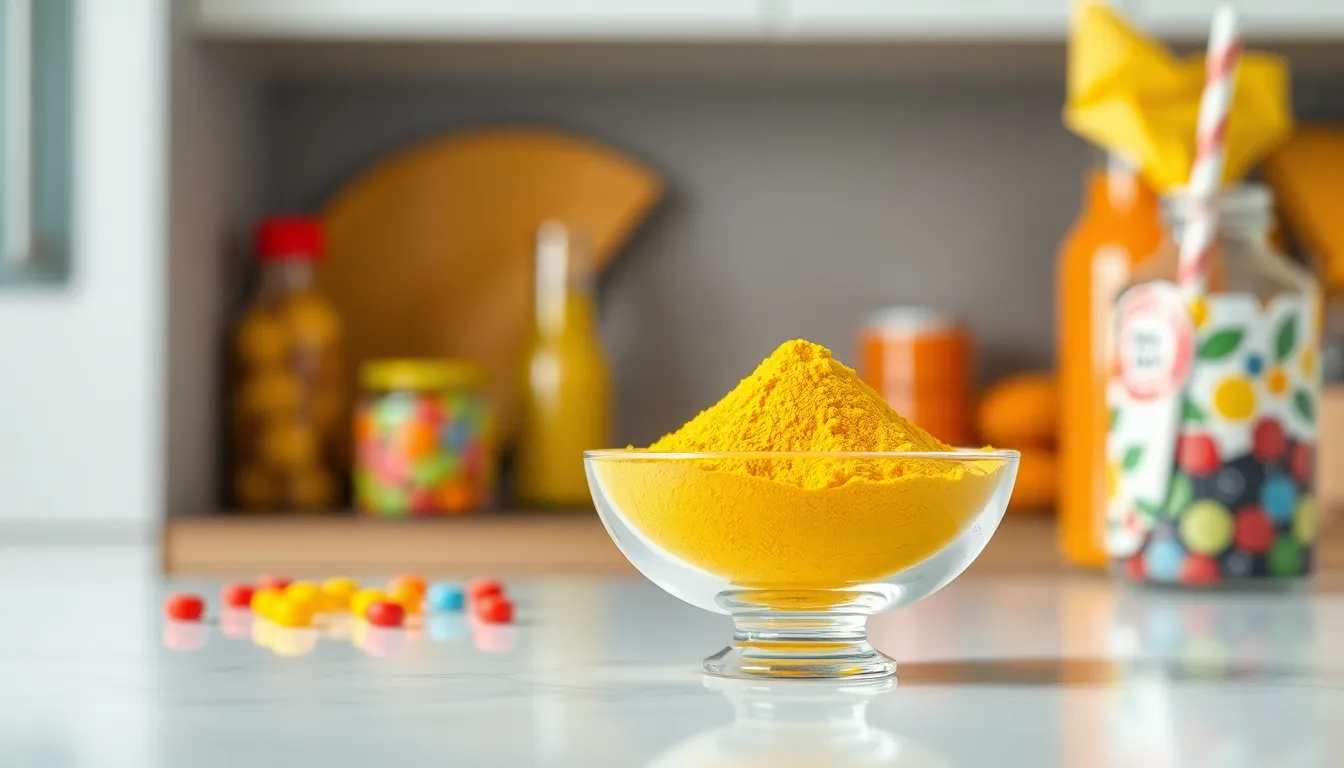
Ever wondered what gives your favorite snacks that vibrant yellow hue? Enter Yellow 5, the dazzling dye that’s as popular as it is controversial. This bright little number, also known as Tartrazine, pops up in everything from sodas to breakfast cereals, making it a staple in the food industry. But what exactly is it made of, and should you be concerned?
As consumers become increasingly savvy about their food choices, understanding the ingredients lurking in those colorful treats is crucial. Yellow 5 may add a splash of sunshine to your plate, but it’s time to peel back the layers and uncover its true origins. Spoiler alert: it’s not just sunshine and rainbows! Buckle up as we dive into the fascinating world of food additives and discover what makes Yellow 5 tick.
Overview of Yellow 5
Yellow 5, chemically known as Tartrazine, is a synthetic dye made from various compounds. Primarily, it originates from coal tar or petroleum sources. Its chemical formula is C16H9N3Na3O9S, which provides insight into its structure involving sodium and sulfonic acid groups.
Manufacturers use Yellow 5 extensively in food products, cosmetics, and pharmaceuticals. The dye imparts a bright yellow color, enhancing the visual appeal of items such as candies, soft drinks, and snack foods. This dye also plays a role in storytelling through packaging and marketing by creating enticing colors.
Concerns about Yellow 5 have emerged, especially regarding allergic reactions. Studies indicate some individuals may experience symptoms like hives or asthma. For this reason, regulatory agencies such as the FDA and EFSA monitor its use and ensure safety standards are met.
Moreover, consumers increasingly scrutinize ingredient labels, prompting the food industry to consider alternatives. Research continues into natural coloring agents, such as turmeric or beet juice, as substitutes for synthetic dyes. Although Yellow 5 enjoys approval in many countries, understanding its composition remains essential for consumer choice.
Insights into Yellow 5 find relevance in discussions about food safety and labeling transparency. As awareness surrounding additives grows, discussions about their origins and potential effects on health become more critical. Awareness allows consumers to make informed decisions about what they consume.
Chemical Composition of Yellow 5
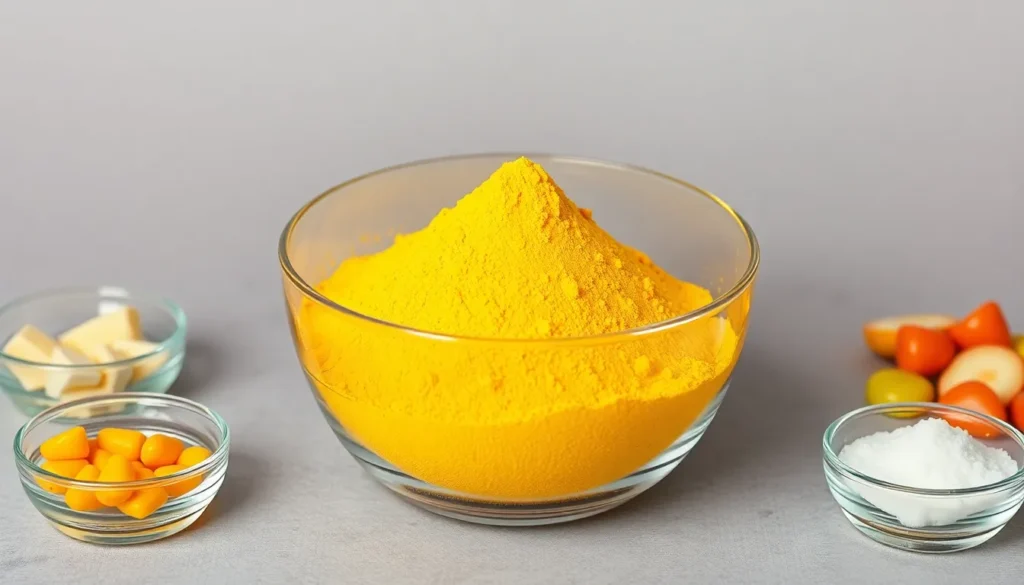
Yellow 5, also known as Tartrazine, consists of specific chemical components that contribute to its vibrant color.
Main Ingredients
Yellow 5 is primarily made of sodium, nitrogen, carbon, oxygen, and sulfur atoms. The chemical formula C16H9N3Na3O9S represents its molecular structure, highlighting the arrangement of these elements. Additionally, it exists as a bright yellow powder, enhancing the aesthetic appeal of food products. As a synthetic dye, Yellow 5 often derives its vibrant coloration from coal tar or petroleum sources. Its chemical properties make it suitable for various applications, including candies, beverages, and processed foods.
Additives and Preservatives
Manufacturers often combine Yellow 5 with other additives and preservatives to enhance its effectiveness and shelf life. Common companion ingredients include citric acid, which helps maintain color stability, and sodium benzoate, a widely used preservative. Some products might also contain flavoring agents or other colorants, like Red 40, to create specific shades. Such combinations ensure that the food remains visually appealing and resistant to spoilage. Regulatory bodies assess these additives, ensuring that they meet safety standards for consumer protection.
Uses of Yellow 5
Yellow 5 serves multiple purposes across various industries, enhancing both food and non-food items. Its vibrant hue attracts consumers and plays a significant role in marketing.
Food Applications
Food products widely incorporate Yellow 5, including beverages, candies, and baked goods. Snack items like chips and popcorn often feature this dye to enhance visual appeal. Furthermore, Yellow 5 appears in breakfast cereals, contributing to their colorful presentation. Additionally, some dairy products, such as cheese and yogurt, utilize this dye to achieve a more appealing look. The widespread use across these categories reflects consumer preferences for vibrant and eye-catching products.
Non-Food Applications
Beyond food, Yellow 5 finds use in cosmetics and pharmaceuticals. Many cosmetics, including lipsticks and eye shadows, employ this dye for its bright color, enhancing the product’s aesthetic. In pharmaceuticals, Yellow 5 helps color-code tablets and capsules, aiding in easy identification. Additionally, some household items, such as cleaning products, may incorporate this dye to distinguish between different formulations. These diverse applications showcase Yellow 5’s versatility and importance in both everyday items and specialized products.
Health Implications
Yellow 5, while popular, raises health concerns for some consumers. Understanding these implications is crucial for informed consumption.
Allergies and Sensitivities
Allergic reactions to Yellow 5 have been documented in various individuals. Symptoms may include hives, asthma, and gastrointestinal distress. Certain populations, such as those with asthma or aspirin sensitivity, face a higher risk and may experience exacerbated symptoms upon consuming foods containing this dye. Research conducted by the FDA indicates that some individuals report heightened sensitivity, particularly with artificial colorings. Being mindful of ingredient labels allows consumers to avoid potential reactions.
Regulatory Standards
Regulatory agencies oversee the safety of Yellow 5 in products. The FDA and the European Food Safety Authority (EFSA) establish permissible limits for this dye in food and cosmetics. Levels deemed safe involve extensive testing, assessing both short-term and long-term health effects. These organizations continuously review safety data to ensure compliance with health standards. In response to rising consumer concerns, more stringent regulations may emerge. Transparency in labeling practices earns increasing attention, offering consumers clearer choices regarding their food and product selections.
Understanding Yellow 5’s composition and applications sheds light on its role in the food and cosmetic industries. While it enhances the visual appeal of products consumers enjoy daily, awareness of potential health risks is crucial. The growing demand for transparency in ingredient labeling reflects a shift in consumer preferences towards safer alternatives. As manufacturers adapt to these changes, the future of food additives like Yellow 5 may evolve, prioritizing both aesthetics and health. Staying informed empowers consumers to make choices that align with their values and health needs.